How to Reduce Plagiarism in Thesis Below 10%
An in-depth, examiner-oriented and university-approved guide to help research scholars ethically reduce plagiarism in their thesis or dissertation below 10%.
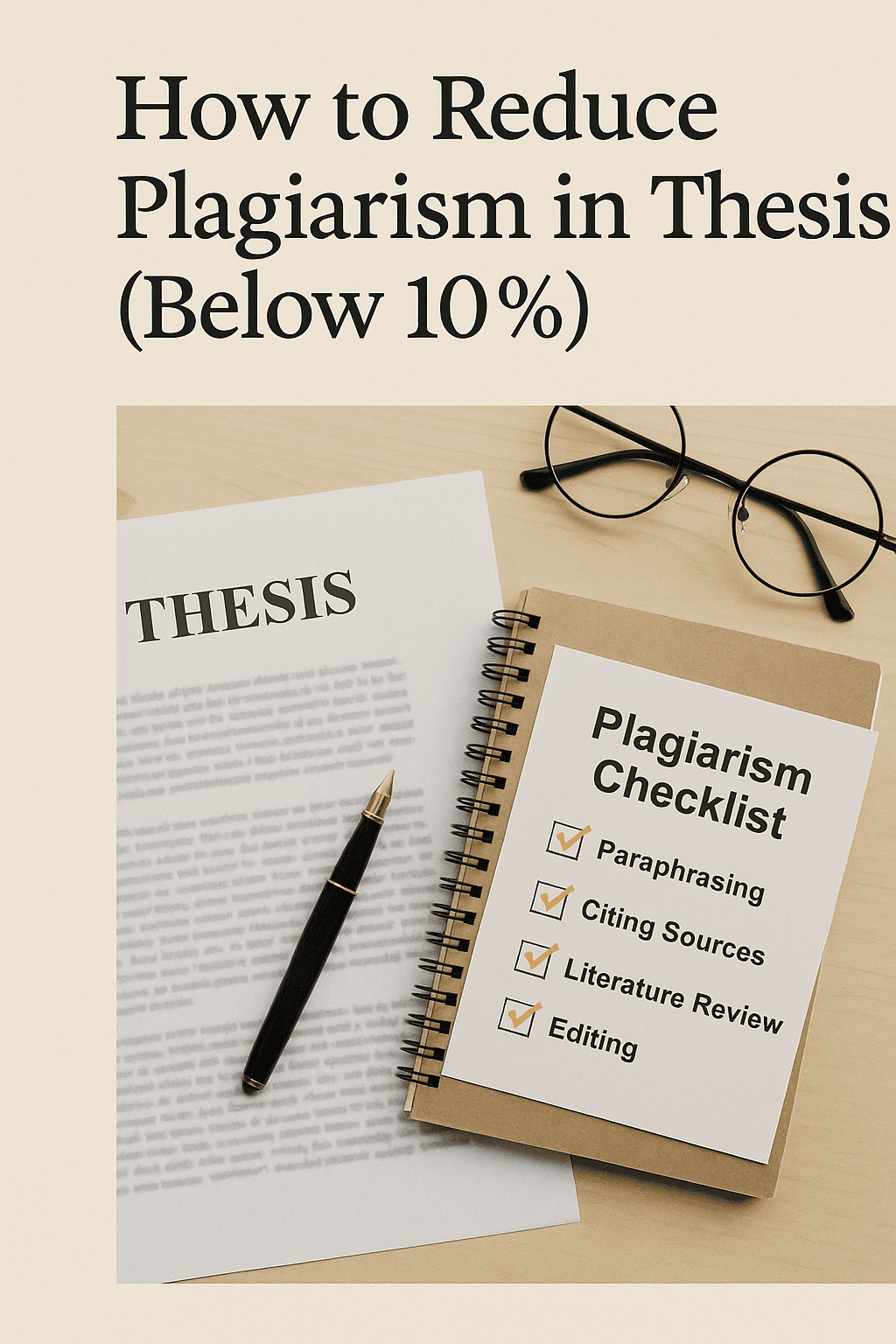
Plagiarism has become one of the most serious academic concerns in higher education. With the widespread availability of online journals, research databases, and AI-based writing tools, universities have tightened plagiarism policies more than ever before. Today, almost every university mandates a plagiarism similarity index of less than 10% for thesis and dissertation submission.
Many students mistakenly believe that plagiarism refers only to direct copy-paste. In reality, plagiarism can occur even when content is paraphrased poorly, cited incorrectly, or structured too closely to existing research. As a result, well-intentioned scholars often face rejection or repeated corrections.
This article is written from an academic examiner’s perspective. It does not promote shortcuts or unethical practices. Instead, it provides proven methods that are accepted by supervisors, universities, and plagiarism-checking software such as Turnitin and iThenticate.
What Exactly Is Plagiarism in a Thesis?
In academic research, plagiarism means presenting someone else’s intellectual work as your own without proper acknowledgment. Intellectual work includes not only words but also ideas, arguments, models, frameworks, tables, figures, and even the logical flow of content.
Importantly, plagiarism may be intentional or unintentional. Examiners, however, judge only the final document, not the intention behind it.
- Direct copying of sentences or paragraphs
- Rewriting text with minor word changes
- Using definitions without citation
- Repeating methodology descriptions from earlier studies
- Reusing one’s own published or submitted work without disclosure
Different Types of Plagiarism Detected in Theses
Understanding the types of plagiarism helps in eliminating them effectively. Thesis plagiarism reports usually highlight the following categories.
1. Direct Plagiarism
This occurs when text is copied word-for-word from a source without quotation marks or citation. Even a few such sentences can significantly increase similarity percentage.
2. Mosaic or Patchwork Plagiarism
Mosaic plagiarism happens when phrases from multiple sources are stitched together with minor changes. Plagiarism tools detect this pattern easily.
3. Self-Plagiarism
Reusing content from your own proposal, published paper, or previous degree project without citation is considered self-plagiarism in most universities.
What Is the Acceptable Plagiarism Percentage?
While plagiarism policies vary slightly, the majority of universities follow a similar benchmark. The table below represents commonly accepted thresholds.
| Similarity Index | Academic Interpretation |
|---|---|
| 0–5% | Excellent originality |
| 6–10% | Acceptable for submission |
| 11–15% | Revision required |
| Above 15% | Likely rejection |
Universities in India generally follow UGC norms. You can read a detailed explanation of UGC plagiarism guidelines for PhD scholars.
Step-by-Step Methods to Reduce Plagiarism Below 10%
1. Concept-First Writing Approach
learn how to write thesis content originallyInstead of rewriting while viewing the source, first understand the concept thoroughly. Then close the source and explain the idea as if you were teaching it to someone else. This naturally produces original sentence structures.
2. Advanced Academic Paraphrasing
True paraphrasing is not about replacing words with synonyms. It involves altering sentence length, changing voice, reordering logic, and integrating interpretation. This method is strongly favored by examiners
3. Strategic Citation Placement
Citations should appear not only at the end of paragraphs but also immediately after borrowed ideas. Proper citation significantly reduces plagiarism risk even when similarity is detected.
4. Literature Review Synthesis
Instead of summarizing one paper per paragraph, combine findings from multiple studies and compare them. This synthesis-based writing drastically reduces similarity.
5. Methodology Personalization
While methodologies may be similar across studies, your explanation should reflect your dataset, tools, sampling, and context. Avoid generic descriptions.
6. Proper Use of Plagiarism Software
Always exclude references, quotations, and small matches while generating reports. These exclusions are permitted by universities and reduce unnecessary similarity.
7. Human Proofreading and Revision
Final proofreading by an academic editor ensures clarity, originality, and examiner-friendly language, which automated tools cannot achieve.
Scholars who need expert assistance may consider our professional plagiarism reduction service, which follows strict university and Turnitin guidelines.
Recommended Plagiarism Checking Tools
Universities rely on specific plagiarism detection tools. Students should be aware of the difference between official and unofficial checkers.
- Turnitin – most widely accepted by universities
- iThenticate – commonly used for journal submissions
- Urkund – popular in European institutions
- Free tools (for self-check only, not submission)
Frequently Asked Questions on Thesis Plagiarism
Can I submit a thesis with 12% plagiarism?
Most universities require plagiarism below 10%. A similarity index above 10% usually requires revision.
Does Turnitin exclude references?
Yes. References, quotations, and small matches can be excluded as per university guidelines.
Is paraphrasing allowed in thesis writing?
Yes, ethical paraphrasing with proper citation is fully acceptable and encouraged.
For journal submissions, plagiarism rules may differ. Learn more about iThenticate vs Turnitin differences.
Final Thoughts
Reducing plagiarism below 10% is not about manipulating reports; it is about developing disciplined academic writing habits. When originality, ethical citation, and critical thinking are combined, plagiarism naturally remains within acceptable limits.
Scholars who follow the strategies outlined in this guide not only meet university requirements but also produce higher-quality research that stands up to academic scrutiny.
About the Author
Dr. Poonam is an academic research mentor with over 10+ years of experience in guiding PhD, MBA, and MSc scholars. She has reviewed hundreds of theses for plagiarism compliance under UGC, AICTE, and international university guidelines.
Learn more about her academic mentoring work on the About Dr. Poonam page.
Need Help Writing Your Thesis Plagiarism
Get personalised guidance from Dr. Poonam. Learn theme-wise writing, research gap finding, and academic flow structure.
Book Assistance →